
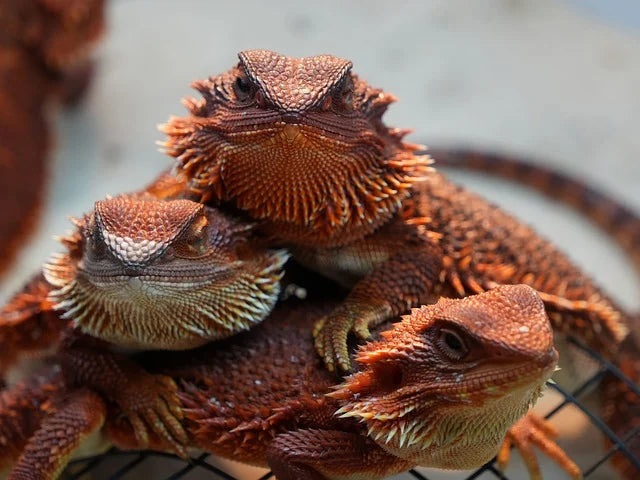
I raise Black Soldier Fly Larvae on my farm in Aurora, Colorado and ship them to reptile keepers across the country. Bearded dragons are one of the most common animals my customers feed BSFL to, and for good reason, they're high in protein, have a calcium-to-phosphorus ratio that blows mealworms out of the water, and their soft body wall makes them easier to digest than hard-shelled feeders. If you keep bearded dragons and you're still making weekly cricket runs, it's worth knowing what you're comparing against.
BSFL Nutritional Profile for Bearded Dragons
On a dry weight basis, BSFL contain approximately 40–50% protein and 25–35% fat, comparable to crickets in protein with higher fat content. For bearded dragons, the calcium-to-phosphorus (Ca:P) ratio matters more than raw protein: live BSFL raised on quality substrates have a Ca:P ratio generally ranging from 1.5:1 to as high as 8:1 depending on diet, far more favorable than mealworms (approximately 0.04–0.10:1) and unsupplemented crickets, which, despite being a better calcium source than mealworms, still fall well short of BSFL's natural calcium availability.
The higher fat content is worth noting. It's a benefit for juvenile bearded dragons in rapid growth phases where they need more energy per feeding. For adult beardies transitioning to a vegetable-dominant diet, BSFL are best offered in moderation rather than as the primary feeder insect.
BSFL vs. Mealworms for Bearded Dragons
BSFL are nutritionally superior to mealworms for bearded dragons. Mealworms have a Ca:P ratio of roughly 0.04–0.10:1, heavily phosphorus-dominant, which means calcium supplementation is required on every feeding to avoid metabolic bone disease over time. BSFL have naturally higher calcium and require less intensive supplementation, particularly when offered live.
Mealworms also have a tough exoskeleton with high chitin content, which increases impaction risk in smaller or younger animals when fed in large quantities. Live BSFL have softer body walls and are easier to digest. I've had customers reach out after dealing with impaction in a young beardie from too many mealworms, it's expensive to treat and stressful for the animal. BSFL sidestep that problem.
BSFL vs. Crickets for Bearded Dragons
BSFL and crickets each have advantages for bearded dragons, and most keepers I talk to rotate both rather than relying on one. Crickets provide hunting stimulation and behavioral enrichment, the movement triggers natural foraging behavior in beardies. BSFL have better natural calcium availability, don't escape, don't chirp at 2am, and have a longer shelf life when stored correctly.
Nutritionally, BSFL and crickets are comparable in protein on a dry weight basis, but BSFL are higher in fat and have better calcium content without supplementation. If you're maintaining a BSFL colony at home, cost per feeding drops considerably compared to store-bought crickets.
Live vs. Dried BSFL for Bearded Dragons
Live BSFL are nutritionally superior to dried for bearded dragons, primarily because drying reduces moisture content and lowers the available calcium. If you're using dried BSFL as the primary feeder, calcium supplementation should be applied more consistently than with live feeders.
Dried BSFL are shelf-stable and convenient, a lot of reptile keepers use them as a supplement or training reward rather than a staple feeder. If you're able to maintain a small home colony or source live BSFL reliably, live is the better option for bearded dragons as their main insect protein source. I ship live BSFL in insulated packaging with enough substrate to keep them healthy in transit, they arrive ready to feed.
How to Feed BSFL to Bearded Dragons
BSFL should be appropriately sized, general reptile husbandry guidance is that feeder insects should be no wider than the space between the animal's eyes. For most adult bearded dragons, medium to large BSFL work well. For hatchlings and juveniles, use small or extra-small larvae.
Juvenile bearded dragons (0–12 months): Juveniles need approximately 50–70% insect protein in their diet, with younger hatchlings eating toward the higher end. BSFL are a good fit here, the fat content supports rapid growth, and their soft bodies reduce GI stress. Offer as many BSFL as the dragon will eat in a 10–15 minute feeding session, 2–3 times per day.
Adult bearded dragons (12+ months): Adults shift to roughly 70% plant matter and 30% insects. BSFL should be part of the protein rotation, offer them 3–4 times per week, not as the sole insect source. Rotating feeders keeps nutrition balanced and gives the animal variety.
Calcium supplementation: Live BSFL raised on quality substrates have better natural calcium content than most other common feeder insects. Light calcium dusting every few feedings is still reasonable practice, especially for juveniles and breeding females. Dried BSFL should be supplemented more consistently.
Growing Your Own BSFL for Reptile Feed
Growing your own BSFL means a consistent supply of live feeders from food scraps, at a fraction of the cost of buying weekly from a pet store or supplier. A basic home colony setup requires a rearing bin for larvae, a separate adult breeding cage, bright lighting for the breeding cage (BSF adults mate only in direct sunlight or high-intensity full-spectrum light, oviposition is triggered by light exposure, and without adequate lighting females will not produce eggs), a heat source to hold 27–30°C (80–86°F), and organic kitchen waste to feed them. Most people go from first setup to harvestable larvae in 3–5 weeks.
Larvae are harvested at the prepupae stage, when they darken and begin migrating out of the substrate, which is when protein and fat content peak. A self-harvesting ramp makes the process largely hands-off once established. One bin running consistently can produce enough feeders to supplement multiple bearded dragons without buying another bag of crickets.
If you're raising BSFL on quality feedstocks, fruit and vegetable scraps, spent grain, poultry mash, the nutritional profile of what you harvest is better than most commercially sourced feeder insects because you control what goes into them. That's how I raise mine at Blue Grub Farms, and it's the same approach that works at home scale.
Frequently Asked Questions
Q: How do I store live BSFL so they last longer before feeding?
A: Keep them at 50–55°F (10–13°C), a wine fridge or cool basement works. At that temperature, metabolism slows and they'll stay in larval stage for 2–3 weeks without pupating. Don't refrigerate below 45°F or they'll die. Keep them in a ventilated container with a thin layer of substrate.
Q: My bearded dragon won't eat BSFL. What should I try?
A: Some beardies need movement to trigger feeding response. Try placing BSFL in a shallow dish where they wriggle but can't escape, a smooth-sided feeding bowl works. You can also try offering them with tongs so the movement catches the dragon's attention. If they've been on crickets exclusively, the transition sometimes takes a few feedings.
Q: What size BSFL should I order for my bearded dragon?
A: Match the larvae width to the space between your dragon's eyes. For hatchlings under 4 inches, use extra-small (under 1/2 inch). Juveniles 4–12 inches do well on small to medium. Adults over 12 inches can handle large BSFL without issue. When in doubt, go one size smaller.
Q: Can I raise just enough BSFL for one or two bearded dragons without a full colony?
A: You don't need a breeding operation to have a steady supply. A single rearing bin fed kitchen scraps can produce enough larvae for 1–3 reptiles. You'd buy a starter batch of small larvae every month or so and grow them up rather than maintaining the full adult breeding cycle. It's lower maintenance than a full colony but still cheaper than pet store crickets.
Q: Do BSFL from Blue Grub Farms arrive ready to feed, or do I need to gut-load them first?
A: Ready to feed. I raise my larvae on a quality organic substrate, fruit and vegetable scraps, spent grain, and supplemental feeds, so they arrive gut-loaded from their rearing diet. You can feed them directly to your beardie on arrival. If you want to hold them for a few days, toss in a slice of carrot or apple to keep them fed.
Q: Can I feed BSFL to other reptiles besides bearded dragons?
A: Absolutely. Leopard geckos, blue-tongue skinks, chameleons, tegus, and most insectivorous or omnivorous reptiles do well on BSFL. They're also excellent for amphibians like pacman frogs and aquatic turtles. The calcium ratio benefits any animal that would otherwise need heavy supplementation from mealworms or crickets.
Q: Are there any signs I'm feeding too many BSFL to my bearded dragon?
A: Watch for weight gain in adults, BSFL are higher in fat than crickets, so overfeeding can lead to obesity in adult beardies that aren't getting enough exercise or greens. If your adult dragon is gaining visible fat deposits (especially around the head and belly), reduce BSFL frequency and increase the veggie ratio. Juveniles in active growth rarely have this problem.
