
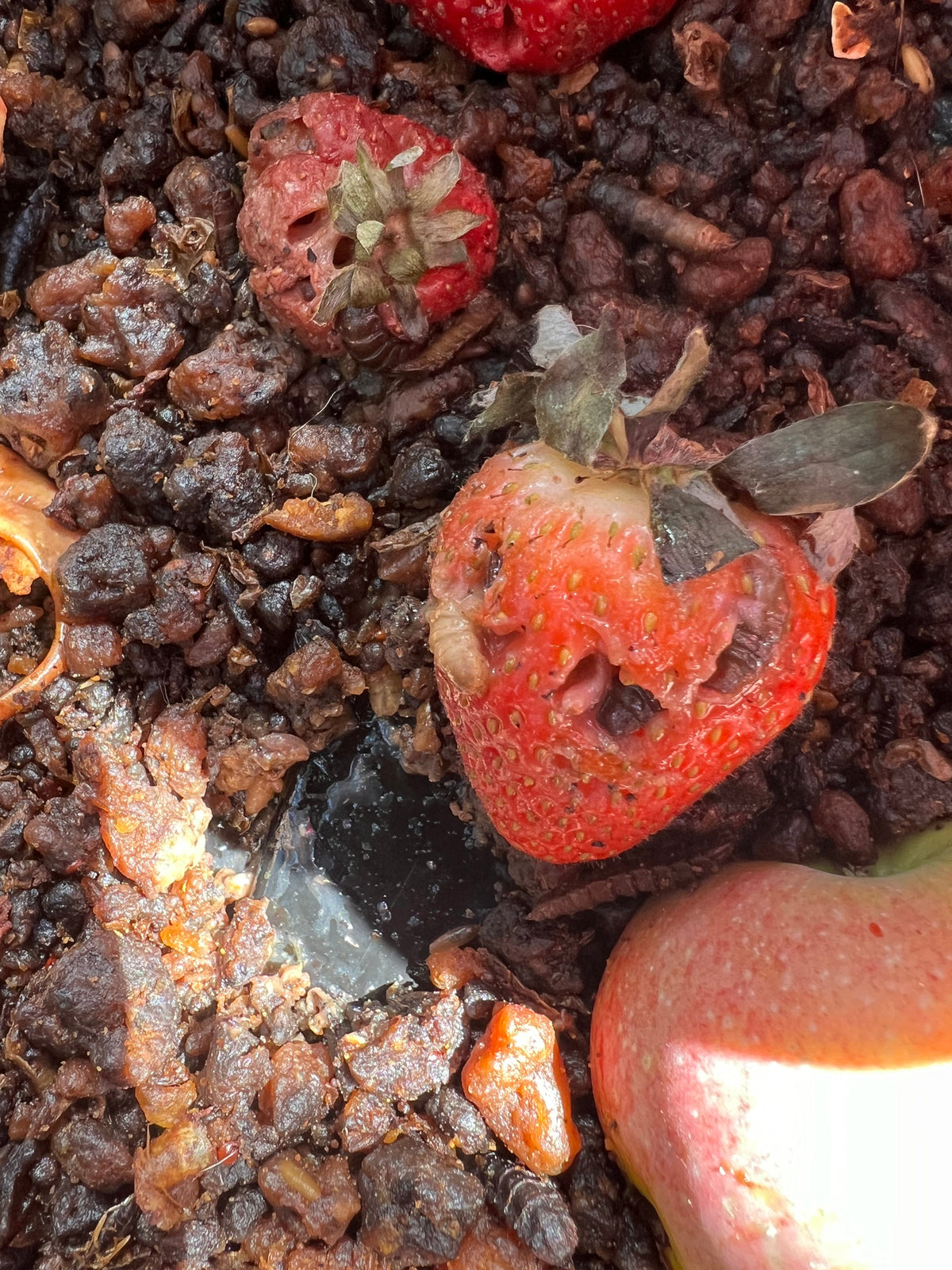
Black Soldier Fly Larvae eat most organic kitchen waste: fruit and vegetable scraps, coffee grounds, eggshells, cooked grains, bread, and similar plant-based food waste. They're not picky, their digestive system handles a wide range of organic material efficiently. But what you feed them matters, because larval diet directly affects the nutritional content of the larvae themselves. I've been running colonies at Blue Grub Farms for over a year now, and the difference between a well-fed colony and a poorly-fed one is obvious in the size, color, and fat content of the harvested prepupae. If you're new to the whole setup, start with how composting with black soldier fly larvae works, then come back here to dial in the diet.
What BSFL Eat Well
These are the staples I feed my colonies every week, and what I recommend for anyone starting out:
Fruit and vegetable scraps: This is the backbone of my feeding regimen. Peels, cores, overripe fruit, vegetable trimmings, all work well. High moisture content helps, but very wet material should be balanced with drier inputs. I go through a lot of banana peels and melon rinds in summer.
Coffee grounds: A reliable, consistent feedstock. I toss my used grounds in daily and the larvae chew through them fast. The grounds also help regulate moisture in the bin.
Eggshells: Crushed eggshells are a calcium source. Larvae don't eat the shells directly, but the calcium becomes available in the bin environment and can be absorbed. I rinse shells before adding to reduce Salmonella risk from raw egg residue.
Cooked grains and bread: Rice, pasta, oats, stale bread, all are processed well. These provide carbohydrates that support rapid larval growth. Don't add large quantities of bread with a lot of salt.
Spent brewing grains, pulp from juicing: Both are excellent. High in moisture and organic content, they drive fast larval growth. I get bags of spent grain from a local brewery and my larvae destroy it in under 48 hours.
What to Avoid
Here's what I keep out of my bins, or limit heavily:
Meat and fish: BSFL can technically process meat, but in a home setting it creates serious odor and increases pathogen risk. Commercial operations manage this with controlled conditions that aren't practical at home. I leave meat out of my bins entirely.
Dairy in large amounts: A cheese rind or a splash of expired milk mixed into other scraps? Fine. But don't dump a quart of old cream in there, it creates odor, goes anaerobic fast, and stresses the colony. Small amounts are no problem; large amounts are.
Citrus skin: The terpene oils in citrus peel deter BSFL feeding. Citrus flesh is fine and gets eaten without issue, it's specifically the skin that's the problem. I either peel citrus before adding it or toss the skins in small quantities mixed with other material.
Heavily salted foods: Salt in large quantities stresses larvae. Small amounts from normal food waste aren't a problem, but don't dump a full container of salty chips or pretzels into the bin.
Avocado skin and pit: Contains persin, which is problematic for many animals. Avocado flesh in small quantities is generally fine, but I exclude the skin and pit.
How Diet Affects Larval Nutrition
The nutrients in what you feed your BSFL end up, in modified form, in the larvae. This matters a lot if you're growing feeder insects for reptiles or chickens.
I've noticed that calcium content in my larvae correlates directly with how much calcium-rich material I add to the bin. Crushed eggshells, oyster shell powder, or other calcium sources raise the calcium content of the larvae themselves, which is exactly what reptile owners want.
Fat content varies with energy-dense inputs. A colony fed primarily fruit scraps and grains will produce leaner larvae than one fed high-fat restaurant waste. For reptile feeders, leaner larvae from a well-managed home diet are generally preferable, and that's what I aim for in my colonies.
Protein content stays relatively stable across different feedstocks. BSFL are efficient at converting whatever you give them into protein, which is one of the things that makes them such a good feeder insect.
How Much to Feed
Feed in amounts the larvae can process within 24–48 hours. Overfeeding leads to excess moisture, odor, and anaerobic conditions that stress the colony. Underfeeding slows larval growth. I've made both mistakes.
A starting rule: add food roughly equal in volume to the amount of larvae present. As the colony grows, increase feeding accordingly. A mature colony in a standard home bin can process 0.5–2 pounds of food waste per day. I weigh my inputs when I'm dialing in a new colony, then switch to eyeballing it once I know the rhythm.
Moisture balance matters. BSFL need moisture to thrive, but standing water in the bin is a problem. If the bin gets too wet, add dry carbon inputs: cardboard, dry leaves, rolled oats. If it gets too dry, add high-moisture material or a small amount of water.
Does Gut-Loading Apply to BSFL?
Gut-loading, feeding feeder insects a nutritious diet before offering them to reptiles, applies to BSFL just as it does to crickets. The key difference is that BSFL have already been consuming food continuously throughout their larval life; their gut content at harvest reflects their recent diet.
For the highest nutritional value at harvest, I feed my colonies high-quality varied inputs in the 48–72 hours before harvesting prepupae. A mix of vegetables and calcium-rich material in that window maximizes the nutritional profile your reptile receives. It's the same concept as gut-loading crickets, but BSFL make it easier because they're always eating.
Frequently Asked Questions
Can BSFL eat meat?
Technically yes, but I don't recommend it for home colonies. Meat creates serious odor and increases pathogen risk in a home setting. Stick to plant-based food waste for home production.
Can BSFL eat citrus?
The flesh is fine. The skin contains terpene oils that deter feeding. I peel citrus before adding to the bin, or toss the skins in small quantities mixed with other material.
What's the best food for BSFL?
Variety. Fruit and vegetable scraps, coffee grounds, grains, eggshells, a mix of inputs produces larvae with a broader nutritional profile than any single feedstock alone. I rotate what I feed based on what's available that week.
Do BSFL need water?
They get most of their moisture from food. High-moisture feedstocks like fruit scraps are usually sufficient. In Colorado's dry climate, I occasionally add a small amount of water to the bin during winter when humidity drops. Don't create standing water, that causes anaerobic conditions and odor.
Can I feed BSFL only one type of food?
A colony can survive on a single feedstock, but larval nutrition and output are better with variety. A mono-diet produces less nutritionally complete feeder insects. Vary the inputs when you can.
