
If you keep reptiles, you've probably been through the feeder insect rotation. Crickets that escape and chirp behind your dresser at 2 AM. Mealworms that need calcium dusting every single feeding. Dubias that your leopard gecko just stares at. I've heard every version of this from customers, and I get it, there's a better option, and it's been gaining serious ground with reptile keepers for good reason.
Black soldier fly larvae, BSFL, solve the two biggest problems in reptile feeding: calcium deficiency and convenience. And they do it without you having to dust, gut-load, or chase anything around the enclosure.
The Calcium Advantage
This is the headline number. BSFL have a naturally high calcium-to-phosphorus ratio, typically between 1.5:1 and 8:1 depending on their substrate. That matters because metabolic bone disease, MBD, is one of the most common health problems in captive reptiles, and it's caused by insufficient calcium relative to phosphorus.
Crickets have an inverted calcium-to-phosphorus ratio. Mealworms are even worse. Both need calcium dusting before every feeding to be safe. BSFL don't need any of that, the calcium is already built into the larva. That alone is reason enough for most keepers to make the switch.
Full Nutritional Profile
On a dry weight basis, BSFL run about 40 to 45% protein and 25 to 35% fat. They're rich in lauric acid, which has antimicrobial properties, and they carry meaningful amounts of vitamins A, B, and D. They've also got a solid spread of amino acids, the building blocks your reptile actually needs to grow and stay healthy.
The fat content is moderate, not excessive. For species prone to obesity, like adult bearded dragons who are less active, you'll want to feed BSFL as part of a varied diet rather than the sole protein source. For growing juveniles, the fat and protein density is exactly what they need.
Why Keepers Actually Prefer Them
The nutrition is one thing, but BSFL are also just easier to deal with day to day. They won't jump out of the feeding dish. They can't climb smooth surfaces, so they stay put. Unlike crickets, they're not going to bite your reptile back. And if you've ever let a cricket bin go a few days too long, you already know the smell situation, BSFL don't have that problem.
They also have a solid shelf life. You can keep them at room temperature for feeding over several days, or cool them down to slow their development and extend storage.
Feeding is simple. Drop them in the enclosure and your reptile does the rest. The larvae wiggle, which triggers that hunting instinct, so even pickier eaters tend to go for them. For arboreal species or animals that won't eat off the floor, a shallow dish keeps them contained.
Which Reptiles Do Best on BSFL?
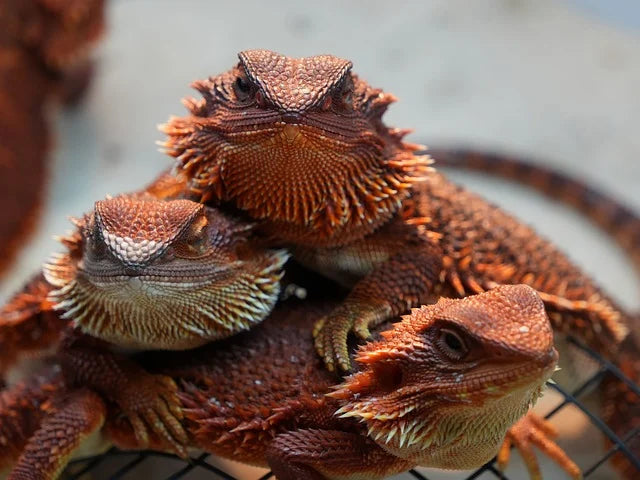
Bearded dragons love them, juveniles especially. Leopard geckos take to them well. Chameleons, blue-tongue skinks, tegus, and most omnivorous or insectivorous lizards will happily eat BSFL once they've tried them. For species with very specific dietary needs, like strictly herbivorous iguanas, they obviously aren't appropriate, but for the vast majority of pet reptiles, BSFL are a strong staple feeder.
One Note on Diet Variety
BSFL are solid enough to work as a primary feeder for most reptile species, but variety still matters. Rotating with other feeders, offering appropriate greens, and adjusting portions based on your animal's age and activity level is good husbandry. No single feeder does everything, BSFL just happen to be the best starting point for most keepers.
I sell live BSFL and dried Golden Grubbies through our shop. If you've been dusting crickets and wondering if there's a better way, there is.
