
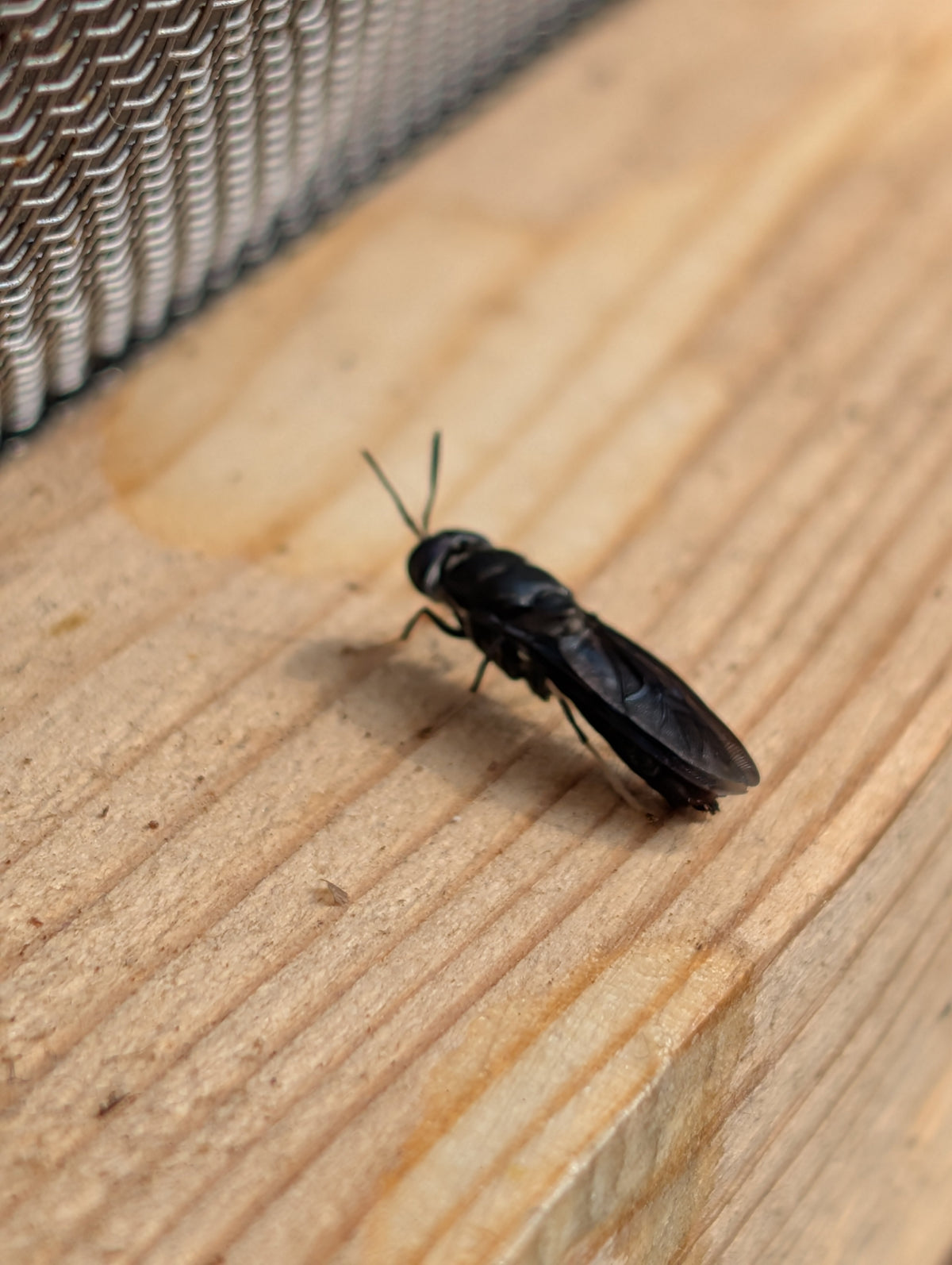
If you've ever maintained a compost pile, you know the drill. You toss in scraps, turn it every week or two, wait a few months, and eventually get something that kind of looks like soil. It works, but it's slow, and it doesn't give you much besides dirt.
Black soldier fly larvae do the same job in a fraction of the time, and they give you two useful outputs instead of one. That's not hype, that's just how their biology works.
What BSFL Actually Do With Your Waste
Larvae in their peak feeding stage, 3rd through 5th instar, will eat roughly 10 to 15% of their body weight per day. Scale that up to a few thousand larvae in a bin and you're processing a couple pounds of kitchen scraps daily. Fruit and vegetable trimmings, coffee grounds, spent grain, old rice, leftover pasta, all of it gets consumed.
What comes out the other end is two things. First, the larvae themselves. They're about 40 to 45% protein and 25 to 35% fat on a dry weight basis. If you raise chickens, keep reptiles, or have fish, those prepupae are high-quality feed that you grew from garbage. Second, the leftover material after the larvae migrate out is frass, a mix of larval castings, shed exoskeletons, and partially processed substrate. Frass has a mild NPK profile, beneficial microbial communities, and chitin, which triggers plant immune responses and helps suppress certain root pathogens. I use it on my raised beds here in Aurora and the difference shows up within a couple weeks.
How Fast Does This Happen?
At optimal temperatures, 27 to 30°C (80 to 86°F), larvae go from egg to prepupae in about 18 to 25 days. During the peak feeding window, roughly 10 to 14 days of serious eating, they can reduce organic waste volume by 50 to 75%. That's not over months. That's weeks.
Compare that to a traditional compost pile that takes 2 to 6 months for a finished product, and you start to see why more backyard farmers and small operations are switching to BSFL. If you want the full walkthrough, here's how composting with black soldier fly larvae works.
What Can They Handle?
BSFL eat things worms won't touch. Cooked food waste, dairy scraps, small amounts of meat, spent grains from homebrewing, manure from chickens or rabbits, all fair game on top of the usual fruit and veg scraps and coffee grounds. A red wiggler bin can't handle half that list.
What to keep out: large volumes of meat or fish, because you'll attract pests before the larvae can process it. Heavily salted or acidic foods slow them down. Pesticide-treated produce is a hard no, larvae bioaccumulate toxins, and those toxins end up in any animal you feed the larvae to. And nothing inorganic, obviously.
The Environmental Angle
Food waste in landfills decomposes anaerobically, which produces methane, about 80 times worse than CO2 as a greenhouse gas over a 20-year window. BSFL divert that waste before it ever reaches the landfill. The larvae process it aerobically, the frass goes into soil, and the protein goes into animal feed. Waste becomes two useful products instead of a methane source.
The larvae themselves require minimal water, no antibiotics, no growth hormones, and no land clearing. They eat what we throw away.
Getting Started
You don't need a complicated setup, a rearing bin with a self-harvesting ramp, a starter culture of larvae, and a consistent source of food scraps. Our BSFL Bin Kit has the bin, ramp, and starter colony. Start with about half a pound of scraps per day and scale up as the colony grows. Within a few weeks you'll have prepupae migrating up the ramp and frass ready to collect.
Three weeks from setup to your first harvest. Two useful products from stuff you were throwing away. That's the whole pitch.
